
QUICK ANSWER
Tooth colored composite is the most popular teeth color filling material because it bonds directly to enamel, matches your natural tooth shade, and typically lasts 7 to 12 years or longer with good care. Porcelain and glass ionomer are also used depending on the cavity’s size and location. Your dentist will recommend the right material after examining the tooth and discussing your goals.
If you have ever needed a cavity filled, you have probably noticed how far dental materials have come. Silver amalgam fillings, once the standard choice, are steadily being replaced by tooth colored composite that looks and feels like a natural tooth. A teeth color filling is not just a cosmetic upgrade. It is a modern restorative option that bonds directly to your enamel, requires removal of less healthy tooth structure, and holds up well for years of everyday chewing.
At Smiley Dental Waltham, patients often ask which filling material is best for them. The right answer depends on the size and location of the cavity, how much of the tooth needs repair, and your personal goals for your smile. This guide breaks down the best teeth color filling materials available today, how they compare, and what to expect from treatment, recovery, and long-term care. You can also visit our full Tooth-Colored Fillings page for more details on this treatment.
In This Article
- What Is a Teeth Color Filling?
- Why Tooth Colored Composite Has Replaced Metal Fillings
- Types of Teeth Color Filling Materials
- How Composite Teeth Filling Treatment Works
- Benefits of Choosing a Teeth Color Filling
- Teeth Color Filling vs Amalgam Filling
- Caring for Your Teeth Color Filling
- When a Filling Is Not Enough
- What Does a Teeth Color Filling Cost?
- Choosing the Right Dental Team
- Conclusion
What Is a Teeth Color Filling?
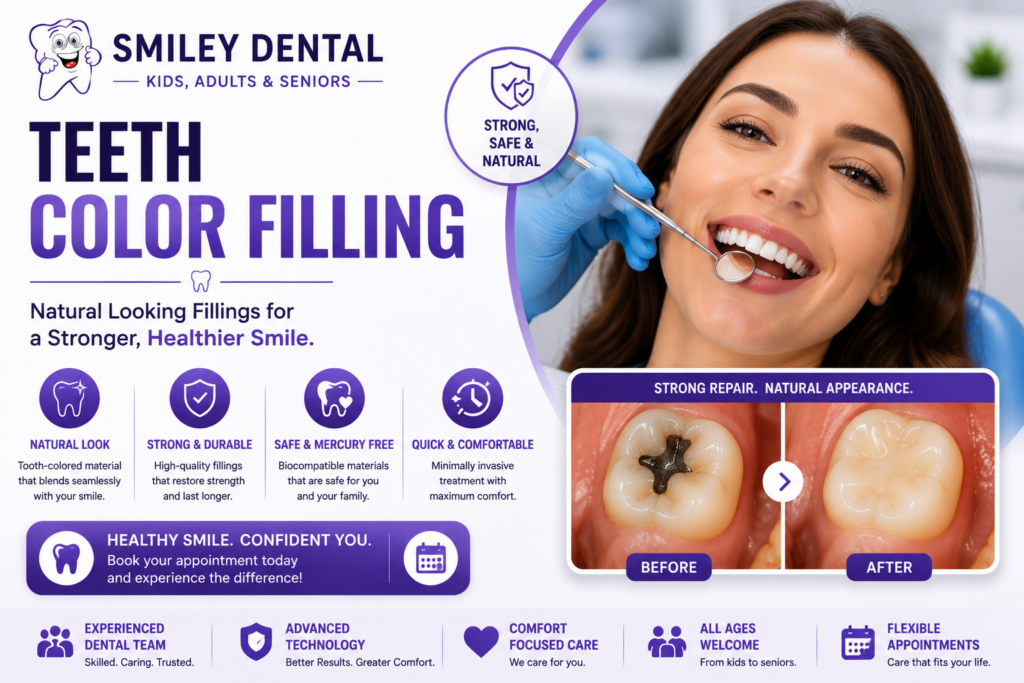
A teeth color filling is a dental restoration made from materials that match the natural shade of your teeth rather than metal. The most common material is composite resin, a blend of plastic and fine glass particles that your dentist layers into the tooth and hardens with a curing light. Unlike older amalgam fillings, a composite teeth filling bonds chemically to the tooth, which helps preserve more of the healthy enamel around the cavity.
Because the material can be shade matched to your exact tooth color, most people cannot tell a filling is there at all. This makes composite an excellent option for both front and back teeth, whether you are treating a small cavity or repairing a chip.
Why Tooth Colored Composite Has Replaced Metal Fillings
For decades, silver amalgam was the default filling material. Today, most patients choose tooth colored composite instead, and for good reason. Composite offers a combination of cosmetic and functional benefits that older materials simply cannot match.
- Blends naturally with the surrounding tooth structure
- Contains no mercury or visible metal
- Bonds directly to enamel for a tighter, more secure seal
- Requires removal of less healthy tooth structure during preparation
- Works well on both front and back teeth
- May reduce the sensitivity to hot and cold that some patients notice with metal fillings
Types of Teeth Color Filling Materials
While composite resin is the most widely used option, it is not the only material dentists rely on. The table below compares the main choices available for a tooth colored composite or ceramic restoration.
| Material | Best For | Average Lifespan | Notes |
|---|---|---|---|
| Composite Resin | Small to mid-size cavities, front and back teeth | 7 to 12+ years | Shade matched, bonds directly to enamel, most commonly used |
| Porcelain (Inlays/Onlays) | Larger cavities or worn teeth | 10 to 15+ years | Stain resistant, custom made in a lab, higher cost |
| Glass Ionomer | Children’s teeth, root surfaces, below the gumline | 5 to 7 years | Releases fluoride, less durable under heavy chewing force |
| Ceramic-Reinforced Composite | Moderate to large restorations | 10+ years | Combines the strength of ceramic with easy application |
Composite Resin (Tooth Colored Composite)
This is the material most people mean when they ask for a teeth color filling. It is versatile, affordable relative to porcelain, and can be completed in a single office visit. Dentists shape the composite while it is soft, then cure it with a special light so it hardens in place.
Porcelain Inlays and Onlays
For larger areas of decay or a tooth that has lost significant structure, porcelain may offer more strength and a longer lifespan. This material is also used in porcelain dental veneers, so patients who want both a filling and a cosmetic upgrade sometimes explore this option together with their dentist.
Glass Ionomer
Glass ionomer releases fluoride over time, which can help protect the tooth from further decay. It is often used for young patients or in areas that are hard to keep completely dry during treatment. Learn more about care for younger patients on our Children’s Dentistry page.
How Composite Teeth Filling Treatment Works
Most patients are surprised by how quick and comfortable the process is. A composite teeth filling is typically completed in one visit, with steps that include:
- Numbing the tooth and surrounding area with a local anesthetic
- Removing decayed or damaged tooth structure
- Cleaning and disinfecting the cavity
- Applying and layering the composite material
- Curing each layer with a special light
- Shaping and polishing the filling to match your natural bite
From start to finish, treatment usually takes less than an hour, and most patients return to normal activities the same day.
Benefits of Choosing a Teeth Color Filling
- Natural, virtually invisible results
- A strong bond that helps support the remaining healthy tooth
- Less post-treatment sensitivity compared to metal fillings
- Mercury-free composition
- Can often repair small chips and cracks, not just cavities
- Supports a confident, healthy-looking smile
Expert Dental Tip
Composite material can also double as a fast cosmetic fix for small chips or gaps through a process called dental bonding. If you have a minor imperfection you would like addressed, ask your dentist whether bonding could be completed during your next visit.
Teeth Color Filling vs Amalgam Filling: A Quick Comparison
| Feature | Composite (Tooth Colored) | Amalgam (Silver) |
|---|---|---|
| Appearance | Matches natural tooth color | Visible metallic gray |
| Bonding method | Chemically bonds to enamel | Mechanically held in place |
| Tooth structure removed | Less | More |
| Mercury content | None | Contains mercury |
| Best use | Front and back teeth | Mostly back teeth |
| Average lifespan | 7 to 12+ years | 10 to 15 years |
Caring for Your Teeth Color Filling
A filling is only as durable as the habits that surround it. Simple daily care goes a long way toward protecting your investment.
- Brush twice daily with fluoride toothpaste
- Floss daily to protect the edges, or margins, of the filling
- Avoid biting down on ice, pens, or other hard objects
- Limit staining beverages like coffee, tea, and red wine for the first 48 hours after treatment
Keep up with routine dental cleaning and dental exams so your dentist can monitor the filling and catch any wear early.
When a Filling Is Not Enough: Other Treatment Options
Sometimes decay or damage goes beyond what a filling can repair. If decay reaches the inner pulp of the tooth, root canal treatment may be needed to save the tooth. When a tooth has lost too much structure for a filling to support it, a dental crown can rebuild strength and shape. If a tooth cannot be saved or is already missing, dental implants offer a long-term replacement option.
For patients focused on overall smile appearance rather than a single tooth, options such as teeth whitening or porcelain veneers can enhance results even further. If misaligned teeth are part of the concern, Invisalign clear braces offer a discreet alternative to traditional braces for straightening teeth before or after restorative work.
What Does a Teeth Color Filling Cost?
Cost depends on several factors, including the size of the cavity, the tooth’s location, and whether dental insurance applies. Composite fillings are generally more affordable than porcelain restorations, while still offering excellent durability. Many dental insurance plans cover a portion of the cost, and Smiley Dental Waltham also offers patient financing options for patients who prefer a flexible payment plan.
Choosing the Right Dental Team for Your Composite Teeth Filling
Material quality matters, but so does the skill of the dentist placing it. Precise layering, shading, and polishing all affect how natural and long-lasting the final result looks. The team at Smiley Dental Waltham has extensive experience matching composite shades to each patient’s smile and shaping restorations that feel comfortable to bite and chew.
Ready to explore your options? Request an appointment online, or call our Waltham office at 781-666-6000 to schedule a consultation.
Conclusion
Choosing the right teeth color filling material comes down to your specific tooth, your goals, and guidance from an experienced dentist. For most patients, tooth colored composite strikes the ideal balance of strength, affordability, and a natural appearance. Whether you need a single cavity treated or a full smile refresh, the Smiley Dental Waltham team is ready to help you find the right fit.
Call 781-666-6000 or visit our Contact page to schedule your visit, or browse our dental blog for more oral health tips from our team.
Frequently Asked Questions
Everything you need to know about teeth color filling materials.