Quick Answer
Start by assessing how severe the problem is. Severe tooth pain, significant swelling, dental trauma, a knocked-out tooth, uncontrolled bleeding, or signs of infection usually need prompt professional evaluation, so call a dental office for guidance. If you have difficulty breathing or swallowing, serious facial trauma, or swelling that is spreading quickly, seek emergency medical care right away rather than waiting for a dental appointment.
| Seek emergency medical care immediately
Go to an emergency room or call 911 if dental swelling comes with difficulty breathing, difficulty swallowing, swelling that is spreading rapidly toward the eye or down the neck, a high fever with confusion, or if you cannot open your mouth. These can indicate a serious spreading infection that needs urgent medical treatment, not a routine dental appointment. |
What Should You Do If Your Mouth Is Bleeding?
Minor bleeding can follow an injury or a procedure such as an extraction, and usually settles. Place clean gauze or a folded cloth over the area and bite down with gentle, steady pressure for ten to fifteen minutes without lifting to check repeatedly.
Contact your dental office if bleeding continues, restarts, or is heavier than expected. Seek emergency medical attention for severe or uncontrolled bleeding, or bleeding with major trauma. Tell your dentist if you take blood thinners, since that affects management.
When Should You Go to the Emergency Room Instead of the Dentist?
This distinction matters. A hospital emergency department can manage pain, infection, and swelling, but generally cannot repair or restore a tooth, so most dental problems still need a dentist afterward.
| Situation | Where to Go |
| Severe toothache, broken tooth, lost crown | Dental office |
| Knocked-out tooth | Dental office immediately, ER if unavailable |
| Swelling with fever, same-day concern | Dental office promptly |
| Difficulty breathing or swallowing | Emergency room or 911 now |
| Serious facial trauma or head injury | Emergency room now |
| Uncontrolled bleeding | Emergency room now |
| Loss of consciousness after injury | Emergency room or 911 now |
What Should Parents Do During a Child’s Dental Emergency?
Children pick up on adult panic, so staying calm helps them cooperate. Reassure your child, then look at the injury.
- Contact your child’s dental provider and describe the injury.
- Do not reimplant a knocked-out baby tooth, though the child should still be seen.
- Control bleeding from lip, tongue, or gum injuries with gentle pressure and a cold compress.
- Save any tooth fragments and keep the area protected.
Common childhood dental emergencies include chipped teeth, sports injuries, knocked-out teeth, severe toothache, swelling, and soft-tissue cuts. Seek emergency medical care for head injury, loss of consciousness, or a wound that will not stop bleeding. For routine care afterward, our children’s dental care team can follow up.
What Happens During an Emergency Dental Appointment?
Knowing the sequence removes some anxiety:
- Discussion of your symptoms and how the problem started.
- Review of medical and dental history, including medications and allergies.
- Examination of the affected area.
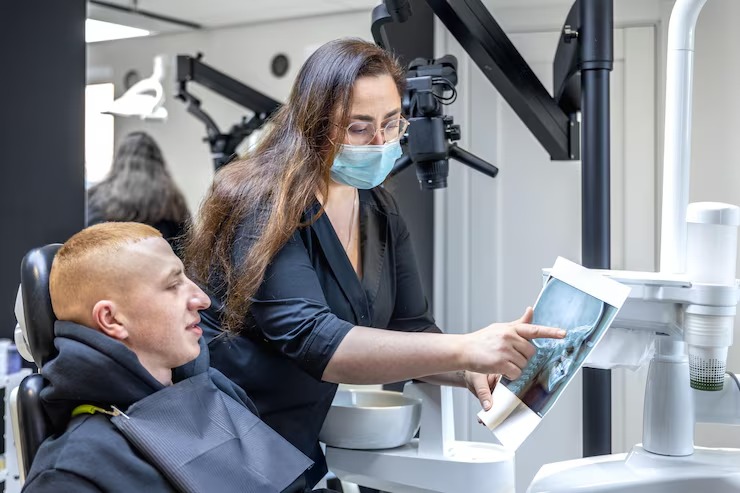
- X-rays or imaging when clinically appropriate.
- Assessment and explanation of what is causing the problem.
- Treatment or stabilization to address pain or protect the tooth.
- Follow-up instructions and a discussion of costs and payment options.
Emergency visits often focus on relieving the immediate problem first, with definitive treatment scheduled afterward.
What Should You Bring to an Emergency Dental Appointment?
Gather what you can, but do not delay urgent care to find paperwork:
| ✓ Photo ID and insurance information, if you have it
✓ A list of current medications, including blood thinners ✓ Relevant medical conditions and allergies ✓ Any tooth fragments or a knocked-out tooth, kept moist ✓ When symptoms began and how the injury happened ✓ Details of recent dental treatment, if related ✓ Questions about treatment and payment options |
What About Cost and Insurance?
There is no single price for emergency dental care. Cost depends on the type of emergency, diagnostic needs, treatment complexity, and whether you have coverage.
Common components include an emergency examination, X-rays, and then treatment such as a filling, crown, root canal, extraction, or management of infection. You can receive care without traditional insurance as a self-pay patient. Ask for a treatment estimate before proceeding when the situation allows, and ask about payment options. Practices can often prioritize the urgent problem and schedule the rest. Do not delay care your dentist considers necessary purely over cost without first asking what options exist. See our patient financing information for more.
How Can You Prepare for a Dental Emergency?
A little preparation makes a stressful moment easier:
- Save your dentist’s number in your phone and ask how after-hours calls are handled.
- Keep up with regular exams, since many emergencies start as small problems.
- Wear a mouthguard for contact sports, for both children and adults.
- Do not use teeth as tools to open packages or cut things.
Consistent preventive dental care and routine dental exams catch issues while they are still minor, which is the most reliable way to avoid an emergency in the first place.
Emergency Dental Care at Smiley Dental Waltham
Our office at 1030 Main Street serves Waltham, Weston, Newton, Watertown, Belmont, and Lexington. We provide same-day emergency dental care for urgent problems including severe tooth pain, broken teeth, dental trauma, and swelling, alongside general, restorative, cosmetic, and children’s dentistry.
Same-day availability depends on your symptoms and the day’s schedule, so calling early helps. Describe what happened when you call and the team can advise on first aid while you travel. Call 781-666-6000.
Other Smiley Dental Locations in Massachusetts
If you are outside the Waltham area, other offices serve their own communities: Smiley Dental Lowell (978-999-9000), Smiley Dental Beverly (978-288-1000), Smiley Dental Boston in Roslindale (857-888-8000), and Smiley Dental Fairhaven (508-967-1000). These are listed by location rather than ranked, and the right one is simply whichever is closest to you.
Common Emergency Dental Questions
What Qualifies as a Dental Emergency?
A dental emergency involves symptoms or injuries needing prompt evaluation because delay could worsen the problem. That includes severe or persistent pain, significant swelling, dental trauma, a knocked-out tooth, a badly broken tooth, uncontrolled bleeding, and signs of infection such as swelling with fever. Milder issues like slight sensitivity, a small painless chip, or a lost filling can usually wait for a regular appointment. If you are uncertain, calling a dental office and describing your symptoms is the quickest way to find out how soon you should be seen.
Should I Go to the Emergency Room for a Toothache?
Usually not, unless there are serious symptoms. An emergency room can provide pain relief and treat infection, but it generally cannot fix the tooth, so you would still need a dentist afterward. For a toothache alone, calling a dental office is faster and less expensive. Go to an emergency room right away if you have difficulty breathing or swallowing, swelling spreading toward your eye or neck, a high fever with confusion, uncontrolled bleeding, or a significant facial or head injury.
Can a Broken Tooth Wait Until the Next Day?
Sometimes, depending on the break. A small chip with no pain can typically wait for a regular appointment. A larger break exposing the inner tooth, causing significant pain, or leaving a sharp edge should be seen promptly, because an exposed nerve is vulnerable to infection. Protect the tooth, avoid chewing on that side, and call a dental office to describe the damage. They can tell you whether same-day care is warranted or whether it can safely wait.
What Should I Do If My Dental Emergency Happens After Hours?
Call your dental office anyway, since many have after-hours instructions or an emergency line on their voicemail. In the meantime, follow appropriate first aid: keep a knocked-out tooth moist, apply gentle pressure to bleeding, use a cold compress for swelling, and take over-the-counter pain relief if it is safe for you. Go to an emergency room for difficulty breathing or swallowing, rapidly spreading swelling, uncontrolled bleeding, or serious trauma. Otherwise, arrange to be seen as early as possible the next day.
Can I Get Same-Day Emergency Dental Care in Waltham?
Many dental offices, including ours, set aside time for urgent problems, though availability depends on your symptoms and the day’s schedule. No practice can guarantee a same-day slot in advance. Calling early in the day generally gives the best chance. When you call, describe what happened and how severe the symptoms are, since that helps the team judge urgency and may allow them to give first-aid guidance while you make your way in.
The Bottom Line
During a dental emergency, assess the severity first, then call a dental office and describe your symptoms. Severe pain, significant swelling, dental trauma, a knocked-out tooth, uncontrolled bleeding, and signs of infection all warrant prompt professional evaluation, and a knocked-out permanent tooth is measured in minutes. Just as importantly, difficulty breathing or swallowing, rapidly spreading swelling, or serious facial trauma are medical emergencies that need a hospital, not a dental appointment.
Most dental emergencies are manageable when addressed quickly, and delaying rarely makes them easier or cheaper to treat. If you are dealing with an urgent dental problem in the Waltham area, contact Smiley Dental Waltham for evaluation and guidance. Call 781-666-6000 or request an appointment, and describe your symptoms so the team can advise you on what to do next.
| Dealing with a dental emergency in Waltham?
Call Smiley Dental Waltham at 781-666-6000 and describe your symptoms. Find us at 1030 Main Street. For difficulty breathing or swallowing, uncontrolled bleeding, or serious facial trauma, call 911 or go to the nearest emergency room. |