
The cost of replacing one tooth depends on which treatment you choose, the condition of the surrounding teeth and gums, whether the damaged tooth needs extracting first, whether bone grafting is required, and what your dental benefits contribute. There is no single figure, which is why an examination comes before an estimate.
Three options cover most situations: a dental implant with a crown, a dental bridge, and a removable partial denture. Each suits different circumstances, and none is automatically the least expensive once the full treatment is accounted for.
Quick Answer
A single dental implant with a crown is one way to replace a missing tooth. A bridge or a removable partial denture may suit other patients better. Total cost depends on the restoration itself, the examination and imaging, and any additional procedures such as extraction or grafting. Insurance benefits and payment arrangements affect what you pay. An examination determines which options are suitable and produces a treatment estimate.
What Affects the Cost of Replacing One Tooth?
Seven things move the figure:
- The type of replacement. An implant with a crown, a bridge, and a removable partial are priced very differently.
- The condition of your gums, jawbone, and neighboring teeth. Gum disease or decay in adjacent teeth usually needs treating first.
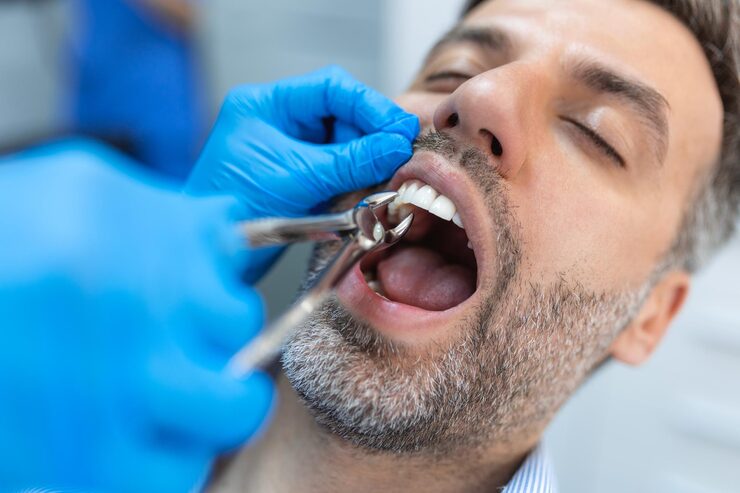
- Whether the damaged tooth needs extraction. That is a separate procedure with its own fee, and a surgical extraction costs more than a simple one.
- Whether bone grafting is needed. Insufficient bone to hold an implant means grafting first, which adds cost and healing months.
- Materials and design of the final restoration. Crown and denture materials vary in cost and durability.
- Diagnostic imaging and follow-up visits. X-rays or a 3D scan may be billed separately, as may review appointments.
- Insurance benefits and payment arrangements. These change what you pay rather than what the treatment costs.
These combine differently for every patient, so an accurate number requires an examination and a written treatment plan. A figure quoted without one is a guess.
What Are the Options for Replacing a Missing Tooth?
Single Dental Implant and Crown
An implant is a small post placed into the jawbone, supporting a crown that replaces the visible part of the tooth. It usually needs several months to integrate with the bone before the permanent crown is attached, though a temporary may be worn meanwhile.
The main advantage is independence. An implant does not rely on neighboring teeth for support, so they are left untouched, and it stimulates the jawbone in a way bridges and dentures do not. The trade-offs: it involves surgery, takes longer, and requires adequate bone and healthy gums.
Our page on dental implants explains how they are used to replace missing teeth.
Dental Bridge
A bridge replaces a missing tooth using the neighboring teeth or other appropriate supports to hold the replacement in place. In the most common design, the adjacent teeth are reshaped and crowned to carry the bridge.
That reshaping is the key consideration. If the neighboring teeth already have large fillings or crowns, using them makes sense. If they are healthy and untouched, a bridge means permanently altering two sound teeth to replace one. Bridges also need careful cleaning underneath and do not address the bone beneath the gap.
Removable Partial Denture
A removable partial replaces one or more missing teeth and clasps onto the remaining natural teeth. It is taken out for cleaning and at night.
It generally has the lowest upfront cost and requires no surgery, which suits patients who are not candidates for fixed treatment or prefer something removable. Fit, stability, and comfort vary, and the ridge beneath it keeps changing shape, so relines or remakes are usually needed eventually.
Which Tooth Replacement Option Is Right for You?
| Implant and Crown | Dental Bridge | Removable Partial | |
| Upfront cost | Highest | Moderate | Lowest |
| Surgery required | Yes | No | No |
| Effect on neighboring teeth | None | Adjacent teeth reshaped | Clasps onto existing teeth |
| Treatment time | Months, including healing | Usually a few weeks | Usually a few weeks |
| Removable | No | No | Yes, for cleaning |
| Effect on jawbone | Stimulates bone at the site | Does not address bone in the gap | Does not address bone in the gap |
| Maintenance | Cleaning and checkups, crown may need replacing | Cleaning beneath the bridge, eventual replacement | Relines and remakes as the ridge changes |
The right choice depends on your oral health, the neighboring teeth, how much bone you have, how long you are willing to wait, and your budget. Implants are not automatically the best answer, nor always the most economical over a lifetime, since a crown on an implant can still need replacing. A dentist who sets out the trade-offs rather than defaulting to one option is giving you what you need.
Can You Replace a Tooth on the Same Day?
Sometimes, partly. Some patients qualify for immediate implant placement, where the implant goes in at the same appointment as the extraction, and some receive a temporary tooth the same day so they do not leave with a visible gap. What it does not usually mean is a completed permanent implant and crown in one visit, since the implant still needs months to integrate before the final crown is fitted.
Eligibility depends on the condition of the tooth being removed, whether infection is present, how much bone support remains, gum health, the forces on that part of your bite, and the treatment plan. It is decided at the examination rather than requested in advance.
You can explore same-day tooth replacement to understand the approaches that may be considered when a faster replacement is needed.
What If You Need an Emergency Tooth Replacement?
A knocked-out adult tooth, severe dental pain, facial swelling, or a badly damaged tooth all warrant prompt dental assessment. What an emergency evaluation does not mean is that an implant can be placed immediately, since that depends on infection, bone support, and healing.
If a permanent tooth has been knocked out, time matters more than anything else. Pick the tooth up by the crown rather than the root. Do not scrub it. If it is dirty, rinse it briefly in milk or saline rather than tap water. Keep it moist, ideally fully submerged in milk or an appropriate tooth-preservation solution, and seek urgent dental care straight away. Do not delay professional care while researching replacement options, because the tooth may be re-implantable if you act quickly.
Patients with urgent tooth replacement concerns can read about whole mouth dental implants and why an examination determines the appropriate next step.
For guidance after a dental injury, see the information about a knocked-out tooth in Waltham.
| Seek emergency medical care immediately if facial or neck swelling is accompanied by difficulty breathing or swallowing. That combination can indicate a spreading infection and is a medical emergency rather than a dental appointment. |
Will You Need a Tooth Extraction Before Replacement?
Only if the tooth cannot be predictably restored. A tooth that can be saved with a filling, root canal treatment, or a crown generally should be, because keeping a natural tooth is usually preferable to replacing it.
When extraction is necessary, the method depends on the tooth’s location, the shape and number of its roots, its condition, and the surrounding tissues. A simple extraction of an intact tooth differs from a surgical extraction of one broken at the gumline or with curved roots.
Extraction and replacement are separate procedures with separate costs, and not every extraction is followed by an implant. Your dentist may discuss immediate placement, delayed placement after healing, or a different option altogether.
You can learn about the differences between regular and surgical tooth extraction to understand why methods and requirements vary.
How Long Does It Take to Replace a Tooth?
For implant treatment, the usual stages are:
- Dental examination, imaging, and treatment planning.
- Extraction or other preparatory treatment, if needed, including bone grafting.
- Implant placement, once the site is ready.
- Healing while the implant integrates with the jawbone, commonly several months.
- Placement of the final crown, with the bite checked and adjusted.
Some patients wear a temporary restoration during healing so the gap is not visible. Bridges and removable partials are generally quicker, often completed within a few weeks, because they do not involve bone healing.
You can read about the permanent dental implant timeline to understand the stages and the waiting periods involved.
Does Dental Insurance Cover Tooth Replacement?
Sometimes, partially, and it varies considerably. Benefits differ by plan, by procedure, and by clinical circumstances, and coverage for implants, bridges, dentures, extractions, and preparatory treatment is often handled differently within the same policy.
Several plan features matter here. Annual maximums cap what the plan pays in a benefit year. Waiting periods can delay coverage for major treatment on newer policies. Some plans contain a missing tooth clause excluding replacement of teeth lost before the policy began. And implants specifically are among the more commonly excluded procedures.
Confirm benefits before treatment begins, and ask for a written estimate separating each procedure. If your insurer offers a pre-treatment estimate, request one, since that gives you the plan’s own figure in writing rather than the office’s projection.
How to Choose a Tooth Replacement Option in Waltham, MA
Weigh these before deciding:
✓ Your overall oral health and the condition of the teeth either side of the gap
✓ How much bone support you have, and whether grafting would be needed
✓ How long the treatment takes and how many appointments it involves
✓ What maintaining each option requires over time
✓ The upfront cost and the likely future costs, including replacement restorations
✓ What your insurance contributes and what payment arrangements exist
✓ How clearly the dentist explains the risks, benefits, and alternatives for your case
Weight that last point heavily. When you replace a tooth in Waltham, the decision rests on information only an examination produces, so the practice that explains your situation most clearly is usually the one to work with.
Frequently Asked Questions About Tooth Replacement Costs
What is the cheapest way to replace one missing tooth?
A removable partial denture usually has the lowest upfront cost and requires no surgery. Whether it is the most economical over time depends on fit, maintenance, relines, and your oral health, so the lowest initial price is not always the lowest total.
What is the best option for replacing a single tooth?
There is no single best option. An implant-supported crown, a bridge, and a removable partial each suit different situations. The decision rests on your oral health, the neighboring teeth, how much bone support you have, your preferences, and your budget.
Can I get a single fake tooth?
Yes. A single missing tooth can be replaced with an implant-supported crown, a bridge, or a removable partial denture. Which of these is suitable depends on your dental condition, particularly the health of the surrounding teeth and the amount of bone at the site.
What is the cost of replacing one tooth?
It depends on the type of restoration and whether additional treatment such as extraction or bone grafting is needed first. We are not publishing figures here, because a quoted average rarely matches a real estimate. A consultation produces an individualized figure after an examination.
Which teeth cannot be replaced?
There is no universal list. The options depend on where the tooth was, the health of the bone and gums at that site, your overall oral health, and whether the available restorations are feasible there. Some sites need preparatory treatment first.
What’s the worst tooth to have removed?
It depends on your bite rather than the tooth alone. Losing a front tooth affects appearance and speech most noticeably, while losing a molar affects chewing and can let neighboring teeth drift. Both matter, in different ways, and both are worth replacing.
How much will one fake tooth cost?
The figure depends on whether the restoration is an implant-supported crown, a bridge, or a removable partial, and on any additional treatment needed first. Materials and design also affect it. Ask for an individualized estimate that separates each procedure rather than a single combined number.
How do you replace a single missing tooth?
The common approaches are a dental implant with a crown, a dental bridge supported by the neighboring teeth, or a removable partial denture. A dentist examines the site, checks the bone and surrounding teeth, and discusses which options are appropriate for your situation.
How much is one false tooth?
There is no single price, because materials, design, treatment requirements, and insurance benefits all vary between patients. Ask for a breakdown of the proposed treatment costs showing the restoration, any extraction or grafting, imaging, and follow-up visits as separate items.
Can a dentist put a fake tooth in?
Yes. A dentist can discuss an implant-supported crown, a bridge, or a removable partial, and carry out the treatment or refer where a specialist is appropriate. The right choice depends on your oral health, the site, and what you want from the result.
Getting an Estimate for Your Own Situation
What it costs to replace a tooth in Waltham comes down to the restoration you choose, whether extraction or grafting is needed first, how long healing takes, and what your benefits contribute. Those combine differently for every patient, which is why no article can give a reliable figure.
The useful next step is an examination. Contact Smiley Dental Waltham to have the site assessed, discuss which options are suitable for your case, and receive an individualized treatment estimate before you decide on anything.