
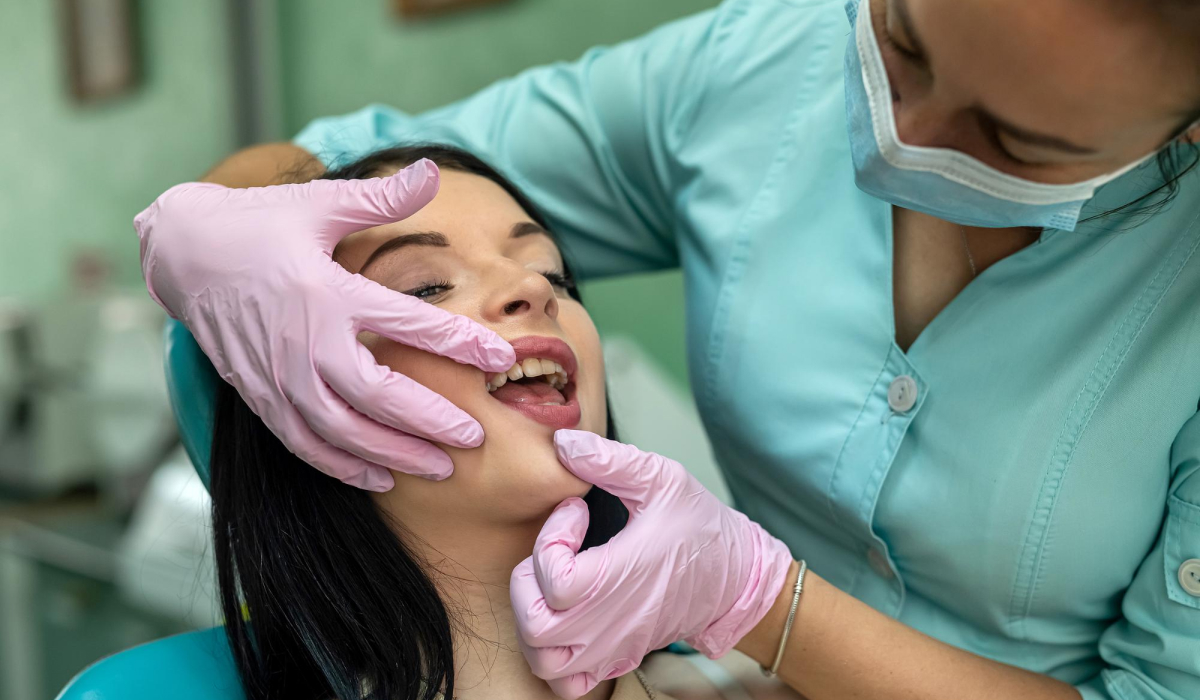
Whether same-day treatment is realistic for you depends on your bone, your gums, and your overall health. This guide explains what “teeth in a day” actually involves, who tends to be a good fit, what recovery looks like, and how implants relate to full mouth reconstruction.
Quick Answer
Selected patients may receive full-arch implants and temporary replacement teeth during a single treatment day. It is not suitable for everyone. Treatment starts with a careful evaluation, including dental imaging and a review of bone and gum health. The teeth attached on day one are usually temporary, and permanent teeth are typically fitted after healing. Only an examination can tell you whether same-day treatment fits your situation.
What Does “Full Mouth Dental Implants in One Day” Mean?
“Teeth in a day” describes a treatment approach in which implants are placed and a temporary set of teeth is attached at the same appointment. It does not mean you leave with finished, permanent teeth. Instead of replacing missing teeth one by one, a full arch can be supported by a small number of carefully positioned implants.
So when a practice talks about same-day full mouth implants, it usually means day one is the surgery and the temporary teeth, and the rest of the process continues over the following months.
Is it really possible?
For carefully selected patients, yes. Teeth that cannot be saved may be removed, implants placed, and a temporary fixed arch attached in one visit. That depends on enough healthy bone, healthy gums, and implants that are stable enough to carry the temporary teeth. The American Academy of Implant Dentistry describes the same sequence: removal of diseased teeth, implant placement, temporary teeth that day, and final teeth after healing. No one should promise you same-day treatment before examining you.
Are the teeth you get that day permanent?
Usually not. The first set lets you leave with fixed teeth while the implants heal beneath the gums. The permanent teeth are made later, once the implants have fused with the bone, and are shaped around your healed tissue, your bite, and how you chew.
In order, the process runs like this: implant placement, temporary teeth, a healing period, then the final restoration.
How Does the Same-Day Process Work?
- Consultation and exam. Your dental team reviews your medical history, remaining teeth, gums, jawbone, bite, and what you hope to achieve.
- Scans show how much bone you have, where nerves and sinuses sit, and where the implants can go safely.
- Treatment planning. The plan sets out how many implants you need, whether any teeth must come out, how the temporary teeth will be designed, and what the final teeth will look like.
- Surgery day. Unhealthy teeth may be removed, implants placed, and temporary teeth attached, when your situation allows.
- The implants bond with the jawbone in a process called osseointegration. This takes time and cannot be rushed.
- Final teeth. Once healing has been checked, permanent replacement teeth are fitted.
Who May Be a Good Candidate?
Candidacy comes down to an individual evaluation, not age. Your dentist will look at:
- Whether there is enough bone, and whether your gums are healthy or under control
- Your general health and your ability to keep your mouth clean
- Whether the implants will be stable enough to carry temporary teeth straight away
- Your bite and chewing forces, and how complex the case is
- Whether you can follow aftercare instructions closely
Immediate-load treatment tends to suit people with healthy gums, enough bone, and implants that hold firmly at placement.
Who may need a different timeline?
Significant bone loss, active infection, untreated gum disease, poor implant stability, certain health conditions that slow healing, complicated restorative needs, or a need for bone grafting can all point towards a slower approach. That does not rule implants out. It usually means the treatment is staged over a longer period.
Will your natural teeth need to be removed?
Sometimes. Teeth that are badly damaged or cannot be saved reliably may be extracted as part of a full-arch plan. But your dentist assesses each tooth separately, and healthy teeth are not removed automatically.
How many implants does a full arch need?
Not one per missing tooth. A full arch can often be supported by several well-placed implants. The right number depends on your bone, the design of the teeth, your bite forces, and the technique used, so there is no single figure that applies to everyone.
Full Mouth Implants vs. Full Mouth Reconstruction
The two terms overlap but are not the same thing.
| Full Mouth Dental Implants | Full Mouth Reconstruction | |
| Purpose | Replace missing or unsaveable teeth with implant-supported teeth | Address multiple dental problems across the whole mouth |
| Scope | Centered on implants and the teeth they support | Can combine restorative, periodontal, and other treatments |
| Natural teeth | May involve removing teeth that cannot be saved | May include saving and restoring natural teeth |
| Procedures | Implant placement and implant-supported teeth | Fillings, crowns, bridges, implants, gum care, and more |
| Timeline | Depends on surgery, healing, and final restoration | Depends on how many procedures are needed |
| Planning basis | Bone, gums, anatomy, bite, and tooth design | Overall oral health, function, appearance, and goals |
Implants are sometimes one piece of a wider full mouth reconstruction plan, especially when a patient needs more than tooth replacement alone.
What Happens After Surgery?
Expect temporary fixed teeth, a softer diet while the area heals, and detailed cleaning instructions. Follow-up visits matter because they let your team check healing and implant stability. Final teeth are planned only after the right healing period, and you should not expect to eat anything you like straight away.
When do you get the permanent teeth?
Same-day treatment and the permanent restoration are separate events. Implants need time to integrate, and the final teeth are usually planned after sufficient healing. Some patients need extra procedures first. Timelines vary, and no single timeframe applies to everyone.
Benefits and limitations
Possible benefits for selected patients
- Fixed temporary teeth during the early treatment period
- Fewer separate surgeries in some cases
- A coordinated pathway toward a full arch of replacement teeth
Possible limitations and risks
- Implant failure or infection can occur, and temporary teeth can be damaged
- Healing can take longer than expected, and extra procedures may be needed
- The final teeth may need adjustments, and implants need lifelong maintenance
How Much Do Same-Day Full Mouth Implants Cost?
There is no single price. The total depends on how many implants you need, how many arches are treated, any extractions, bone grafting, imaging, sedation or anesthesia, the temporary and final teeth, the materials chosen, how complex the case is, and follow-up care. A personalized estimate is only possible after an examination.
Full Mouth Dental Implants in Waltham, MA
If you are considering full mouth implants in Waltham, the first step is an evaluation of your remaining teeth, gum health, bone support, bite, existing dental work, and goals. Depending on what is found, your plan might involve whole mouth dental implants, broader full mouth reconstruction, or other restorative dentistry in Waltham. Every plan for dental implants in Waltham begins with an individual exam, not a one-size-fits-all package.
Questions to bring to your consultation
| ✓ Am I a candidate for immediate-load treatment?
✓ Will my same-day teeth be temporary or permanent? ✓ How many implants will my plan need? ✓ Can any of my natural teeth be saved? ✓ What imaging will I need? ✓ What will healing involve, and how long will it take? ✓ Can I have a written, personalized estimate? ✓ What does my insurance cover? |
Why Smiley Dental Waltham?
Our office at 1030 Main St serves patients across Waltham and nearby towns. If you are exploring full mouth implants, an individual evaluation is where we start.
- Thorough evaluation, including diagnostic imaging when clinically appropriate
- Plain explanations of what a same-day plan would and would not include for you
- Personalized planning, not a standard package
- Guidance across options: whole mouth implants, full mouth reconstruction, and restorative dentistry
Frequently Asked Questions About Full Mouth Implants
- Can you get a full mouth of dental implants in one day?
Some patients can have implants and a temporary full arch of teeth placed in one visit, depending on bone health, gum health, and general health. “Same day” normally refers to the surgery and temporary teeth, not the finished permanent set. Patients who do not qualify can often still get implants on a staged timeline.
- What is the cost of same-day dental implants?
It varies widely with the number of implants, any extractions or grafting, the type of temporary and permanent teeth, imaging, sedation, materials, and follow-up care. The most reliable figure is a personalized estimate after an exam.
- What are the disadvantages of same-day dental implants?
Possible downsides include implant failure, infection, damage to temporary teeth, and slower-than-expected healing. Not everyone qualifies, and some patients need bone grafting or other procedures before or after treatment.
- Can I have a tooth extracted and an implant placed on the same day?
In some cases, yes. This is often called immediate implant placement. It is not right for every extraction site, especially where there is infection or not enough bone, so each tooth is assessed individually first.
- What is the average cost of a full mouth implant?
No fixed average reliably applies, because the price depends heavily on implant numbers, extractions, grafting, imaging, materials, and complexity. An estimate after your evaluation is the most dependable number.
- What disqualifies you from dental implants?
Factors that can affect candidacy include significant bone loss, active infection, untreated gum disease, certain uncontrolled health conditions, and anything that could interfere with healing. These do not always rule implants out, since extra treatment can sometimes make a patient a suitable candidate.
- How painful are full mouth dental implants?
It varies from person to person and with the extent of the surgery. Local anesthesia is typically used, sedation is available for some patients, and some soreness during healing is common and manageable. The treatment is not completely painless.
- How long does it take to place a full mouth of implants?
Placement of the implants and temporary teeth may take a single visit for some patients. The whole process, including healing and the final teeth, usually spans several months.
- Will I be without teeth while waiting for implants?
Not necessarily. Many same-day plans include temporary fixed teeth attached soon after the implants go in, so most patients are not without teeth during healing.
The Bottom Line
Whether you can get a full mouth of dental implants in one day depends almost entirely on your own evaluation. Selected patients may receive implants and temporary teeth in a single visit, but the permanent teeth generally follow after healing and integration. Because eligibility differs from person to person, an examination is the only reliable way to learn what your timeline would look like.
If you are considering full mouth implants or want to know whether same-day treatment suits you, contact Smiley Dental Waltham at 1030 Main St or call 781-666-6000 to schedule an evaluation.
| Wondering if same-day full mouth implants are right for you?
Smiley Dental Waltham, 1030 Main St. Call 781-666-6000 to schedule an evaluation. We will explain your options before recommending anything. |