Quick Answer
Choosing a family dentist means looking beyond location and price. Consider the range of preventive, restorative, emergency, and children’s services offered, along with communication style, comfort, scheduling, insurance options, and technology. The right fit is a practice that meets your family’s needs today and can support your oral health as those needs change over time.
Finding a family dentist in Waltham is one of those tasks that feels simple until you start comparing options. Location and price are easy to check, but they tell you little about whether a practice will actually suit your family over the years.
This guide walks through what really matters, from the services offered and how emergencies are handled to communication, comfort, and convenience. Use it as a practical checklist when comparing family dental care options in the area.
What Should You Look for in a Family Dentist?
Start with the practical basics: does the practice offer the services your family needs, now and likely later? Beyond that, a few factors consistently matter.
- Range of services, covering preventive, restorative, and urgent needs.
- Experience across age groups, from young children to older adults.
- Emergency availability, so you know what happens when something goes wrong.
- Clear communication about diagnoses, options, and costs.
- Comfort and scheduling that fit your family’s routine.
- Insurance and payment options you can plan around.
Priorities differ from family to family. A household with young children may weigh a welcoming environment most heavily, while someone managing older restorations may care more about restorative expertise. There is no single right answer.
Does a Family Dentist Need to Offer Preventive and Restorative Care?
Ideally yes, because most families eventually need both. Having them under one roof means fewer referrals and better continuity when something does need treatment.
Preventive Care
This is the foundation: comprehensive dental exams, professional cleanings and preventive care, gum evaluations, fluoride when appropriate, oral hygiene guidance, and X-rays when clinically indicated. Preventive visits catch small problems while they are still small.
Restorative Care
When a tooth is damaged, decayed, or missing, restorative treatment steps in: fillings, crowns, bridges, and dental implants, among others. A practice offering both means you are not starting over with a new dentist at the moment you most need continuity.
Why Is Restorative Dentistry Important for Families?
Restorative dentistry focuses on repairing or replacing teeth that have been damaged, decayed, worn down, or lost. Over a family’s lifetime, these needs come up more often than people expect.
Fillings repair cavities. Crowns protect teeth that are cracked or heavily worn. Bridges replace a missing tooth using neighboring teeth for support. Dental implants replace the tooth root and can support a crown, bridge, or denture. Each restores chewing function and helps protect remaining tooth structure.
Which option suits you depends entirely on your dental condition, bone support, and goals. There is no universal answer, which is why a dentist should examine and explain rather than prescribe from a menu. Learn more about dental implants if tooth replacement is on your mind.
Should a Family Dentist Offer Emergency Dental Care?
It helps considerably. Dental emergencies rarely arrive at a convenient time, and knowing how your practice handles them removes a lot of stress.
Situations that typically warrant prompt evaluation include severe tooth pain, dental trauma, a broken tooth, a suspected infection, a knocked-out tooth, and significant swelling. Not every dental problem is an emergency, and a sensitive tooth or a lost filling can often wait a day or two. Ask whether the practice offers same-day emergency dental care and how after-hours calls are handled. For severe swelling, difficulty breathing or swallowing, or uncontrolled bleeding, seek urgent medical care right away.
What Should You Look for in a Dentist for Children?
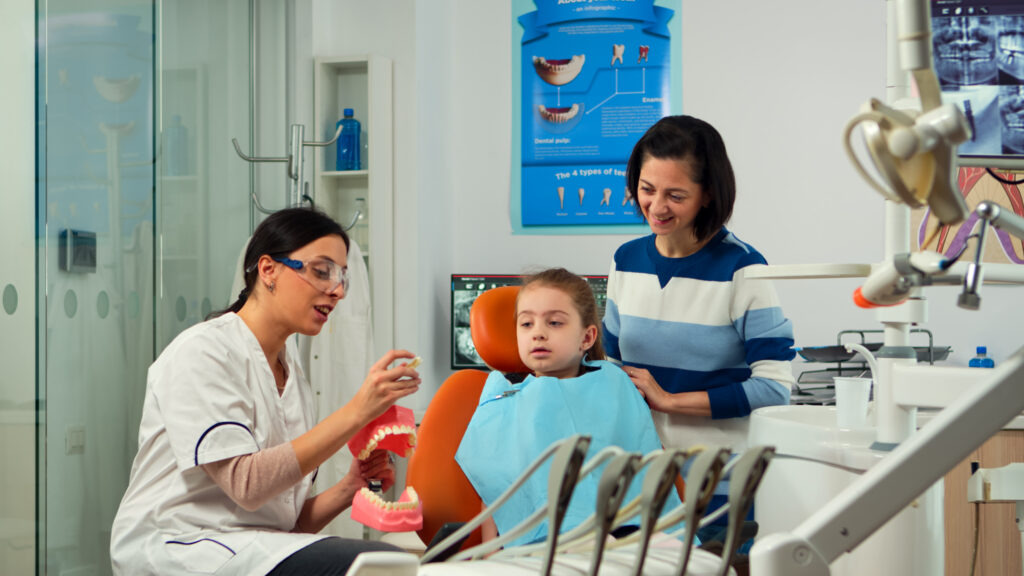
Children need more than smaller instruments. Look for a team that explains things in age-appropriate language, takes time to build comfort, and treats early visits as a chance to establish good habits.
- Patient, friendly communication that does not rush or scare.
- Preventive focus, including cleanings, exams, and fluoride when appropriate.
- Cavity prevention guidance tailored to your child’s age and risk.
- Education for parents, not just the child.
Children’s dental needs change quickly as teeth come in and habits form, so consistency matters. Ask how the practice approaches children’s dental care at different ages.
How Important Is the Dentist’s Approach to Patient Communication?
It is one of the most reliable signals of a good practice. You should leave an appointment understanding what was found, what your options are, and why a particular treatment is recommended.
Good communication means explaining diagnoses in plain language, discussing alternatives, being upfront about benefits and limitations, giving clear aftercare instructions, and listening when you raise a concern or budget constraint. You want informed decision-making, not pressure to accept treatment on the spot.
Does Dental Technology Matter When Choosing a Dentist?
It can help, though it is not the deciding factor. Digital X-rays, digital imaging, and treatment planning tools support more accurate evaluation and let your dentist show you what they are seeing, which makes conversations easier.
That said, technology is a tool, not a substitute for clinical judgment. A dentist who explains your options well with standard equipment beats one with impressive machines who does not take time to talk things through.
How Convenient Should a Family Dental Office Be?
Convenience matters more than people expect, because it affects whether appointments actually happen. A practice that is hard to reach or book with is one families quietly stop visiting.
Consider location relative to home, work, or school, office hours, weekend availability, how easy scheduling is, parking or transit access, and how the practice handles follow-ups. Coordinating several family members into one trip saves real time.
| Questions to Ask Before Booking Your First Appointment Does the practice treat the age groups in my family? What preventive services are available, and is restorative dentistry offered? How are emergencies handled, including after hours? What insurance plans are accepted, and are payment options available? What technology is used for diagnosis, and how are treatment recommendations explained? What should I bring to my first appointment, and how do I schedule future preventive visits? A practice that answers these clearly over the phone will usually communicate well in the chair too. |
What Should You Ask Before Choosing a Family Dentist?
Bring these questions to a call or first visit:
- What dental services do you provide?
- Do you treat both children and adults?
- Do you offer preventive and restorative care?
- How are dental emergencies handled?
- What diagnostic technology do you use?
- How do you explain treatment options and costs?
- What insurance plans do you accept, and what payment options exist?
- How easy is it to schedule, and what happens at a first visit?
A checklist is a starting point, not the decision itself. Choose based on how well a practice fits your family’s actual needs.
Family Dentist Checklist: What Matters Most
Here is a quick reference for weighing your options:
| Factor | Why It Matters |
| Preventive care | Supports ongoing oral health and catches issues early |
| Restorative dentistry | Provides options when teeth are damaged or missing |
| Emergency care | Gives your family a plan for unexpected problems |
| Children’s care | Supports age-appropriate needs as kids grow |
| Communication | Helps you understand diagnoses and choose confidently |
| Technology | Can support diagnosis and treatment planning |
| Convenience | Makes routine appointments easier to keep |
| Insurance and payment | Clarifies financial considerations upfront |
| Comfort | Improves the experience, especially for anxious patients |
| Personalized care | Lets recommendations reflect individual needs |
When Should You Consider Changing Your Dentist?
Switching is worth considering when there is a real reason. Common situations include needing services your current practice does not offer, persistent scheduling difficulty, communication that leaves you confused about your care, or moving to a new area.
Families sometimes switch because they want one practice that can see everyone. If your current dentist meets your needs and explains things clearly, there is no need to change. Continuity has real value, since a dentist who knows your history spots changes more easily.
Common Questions About Choosing a Family Dentist
What Makes a Good Family Dentist?
A good family dentist combines the right range of services with clear communication and a comfortable environment. They should handle preventive care and restorative treatment, be able to see different age groups, explain findings in plain language, and offer recommendations based on your individual needs rather than a standard package. Practical factors matter too, including scheduling that works for your family and transparency about insurance and costs. The best indicator is usually how well they answer your questions before you commit.
Is It Better for the Whole Family to Use the Same Dentist?
It is often more convenient, and many families find real value in it. One practice means coordinated appointments, a single set of records, and a dental team that knows your family’s history and patterns. That said, convenience should not override individual needs. If a family member has a specific requirement, such as complex periodontal treatment or significant dental anxiety, make sure the practice can truly meet it. Ask directly rather than assuming a family practice covers everything.
How Often Should Families Visit the Dentist?
There is no single schedule for everyone. Many healthy adults and children do well with an exam and cleaning about every six months, but the right interval depends on age, oral health, dental history, and risk factors. People with gum disease, frequent cavities, or certain medical conditions often benefit from more frequent visits, sometimes every three or four months, while some low-risk patients need them less often. Your dentist should recommend a schedule based on your family members individually.
How Do I Find a Family Dentist Near Me?
Start with practical filters: location, accepted insurance, and whether the practice treats all the ages in your household. Then look at recent verified reviews, particularly comments about communication and how the office handles emergencies and billing. Call and ask a few questions before booking, since how a practice handles that call tells you a lot. Finally, treat the first visit as a two-way evaluation. You are choosing a long-term partner in your family’s health, not just booking a cleaning.
Why Patients Choose Smiley Dental Waltham
Our office at 1030 Main Street serves families across Waltham, Weston, Newton, Watertown, Belmont, and Lexington with comprehensive care under one roof, including preventive visits, restorative treatment, cosmetic dentistry, and same-day emergency care.
- Comprehensive care for different family members, from children to adults.
- Personalized treatment recommendations based on your exam findings.
- Modern diagnostic technology used when clinically appropriate.
- Clear communication and patient education, so you understand your options.
Whether we are the right fit is for you to decide. If you would like to talk it through, contact our dental team or call 781-666-6000.
The Bottom Line
Choosing a family dentist in Waltham comes down to fit rather than any single feature. Look for a practice offering preventive care, restorative options like fillings, crowns, bridges, and implants, and a clear plan for emergencies. Weigh communication, comfort, convenience, and how well recommendations are tailored to each family member. What works well for one household may not suit another.
Take a moment to think about what your family needs now and what it may need in a few years, then ask the questions in this guide before you commit. If you would like to see whether our approach fits your family, schedule a visit with Smiley Dental Waltham or call 781-666-6000 to talk through your questions first.
| Considering a new family dentist? Smiley Dental Waltham welcomes families at 1030 Main Street. Call 781-666-6000 or request an appointment online to ask questions or schedule a first visit. |
Frequently Asked Questions
Everything you need to know about choosing a family dentist.