
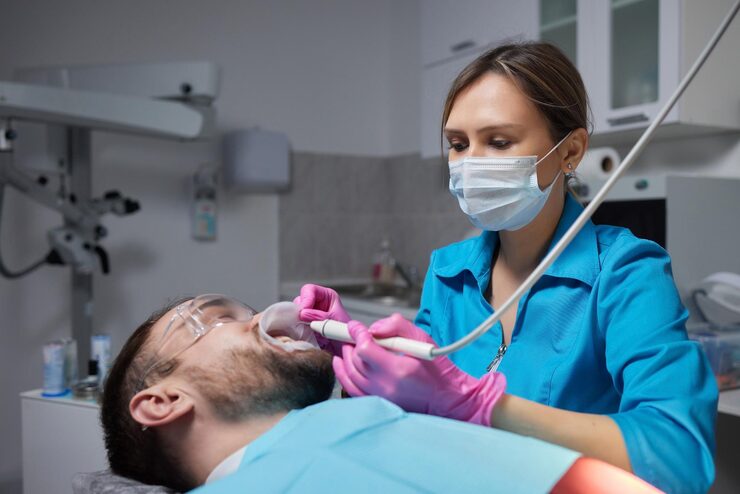
Many patients have a professional dental cleaning about every six months, but that interval is a starting point rather than a rule. The right frequency depends on your gum health, how quickly you build tartar, your cavity risk, and several other individual factors.
Professional cleaning matters even when you brush and floss diligently. Plaque hardens into tartar within a couple of days, and once it does, no amount of brushing removes it. Only professional instruments can. There are also two distinct types of care that patients frequently confuse: regular dental cleaning, which is preventive, and dental deep cleaning, which treats gum disease.
Quick Answer
Many people have regular dental cleanings around every six months, though patients with gum disease, heavy tartar buildup, frequent cavities, braces, or other risk factors often need more frequent appointments. A regular cleaning is preventive care focused on accessible tooth surfaces. A deep gum cleaning is periodontal treatment that reaches below the gumline. Your dentist recommends an interval based on your teeth and gums.
How Often Should You Get a Dentist Teeth Cleaning?
Approximately every six months suits many healthy adults, but it is not a universal schedule. Several factors point toward more frequent visits:
- A history of gum disease or previous periodontal treatment.
- Heavy tartar buildup, since some people accumulate it much faster than others.
- Frequent cavities or difficulty controlling plaque.
- Braces or orthodontic appliances, which trap plaque and complicate cleaning.
- Smoking or tobacco use.
- Dry mouth, whether from medication or a health condition.
- Diabetes, which has a two-way relationship with gum health.
- Difficulty maintaining daily hygiene for any reason.
Patients treated for periodontitis often move to a three or four month schedule, because bacteria repopulate previously affected areas faster. Others with excellent gum health may do fine at longer intervals. A dentist can recommend an appropriate schedule after examining your teeth and gums, and that recommendation should be specific to you rather than a default.
What Is a Regular Dental Cleaning?
A regular cleaning, sometimes called a prophylaxis, is preventive care for patients with generally healthy gums. It removes plaque, tartar, surface buildup, and some external staining from the accessible surfaces of your teeth.
- Examination of your teeth and gums, often including pocket measurements.
- Professional plaque and tartar removal using hand instruments or ultrasonic scalers.
- Polishing to smooth surfaces and remove remaining stain.
- Oral hygiene guidance tailored to what the hygienist observed.
- Recommendations for when to return.
A cleaning is a different procedure from a filling, root canal, extraction, or periodontal treatment. It is also usually paired with a dental exam in Waltham, which is where decay and other problems are identified.
What Is Dental Deep Cleaning?
Dental deep cleaning generally refers to scaling and root planing, which is periodontal treatment rather than routine prevention.
The essential difference is depth. A regular cleaning works on surfaces you can reach. Deep cleaning extends below the gumline, removing plaque and hardened tartar from root surfaces inside periodontal pockets, then smoothing those roots so gum tissue can reattach. Local anesthesia is typically used, and treatment is often done in sections across more than one appointment.
Follow-up matters here. Patients are usually re-evaluated several weeks later to see how the tissue responded, and many move onto periodontal maintenance at more frequent intervals afterward. Deep cleaning is not simply a longer or more thorough regular cleaning. It addresses a diagnosed condition.
| Regular Dental Cleaning | Dental Deep Cleaning |
| Primarily preventive care | Periodontal treatment |
| Routine maintenance for healthy gums | Recommended when gum disease requires treatment |
| Focuses on accessible tooth surfaces | Includes cleaning below the gumline |
| Removes plaque and tartar | Removes deposits from affected areas below the gums |
| Usually one routine appointment | May require more than one appointment |
| Scheduled periodically | Follow-up and maintenance care often needed |
Your dentist determines which is appropriate based on the condition of your teeth and gums, usually including pocket depth measurements and X-rays.
Why Might a Dentist Recommend Deep Cleaning?
Because an examination found signs of periodontal disease or significant deposits below the gumline that a routine cleaning cannot address.
Specific findings that point toward deep cleaning include gum inflammation, bleeding on probing, periodontal pockets deeper than normal, tartar below the gumline visible on X-rays, gum recession, and measurable attachment loss. Healthy pockets measure one to three millimeters, while readings of four or more suggest areas that cannot be cleaned adequately at home or with a routine cleaning.
If deep cleaning is recommended and you want to understand why, ask to see your pocket measurements and X-rays. A reasonable dentist will walk you through the findings. Treatment should always follow from a diagnosis rather than being applied routinely.
Is It Worth Getting Your Teeth Cleaned at the Dentist?
For most patients, yes. Tartar cannot be removed by brushing once it hardens, and it sits along and below the gumline where it drives inflammation. Removing it is something only professional instruments accomplish.
Beyond tartar removal, cleanings support gum health, keep tooth surfaces cleaner, allow the dental team to monitor changes over time, and reinforce home care habits with feedback specific to what they observe in your mouth. Professional cleaning works alongside daily brushing and flossing rather than replacing either. It also does not guarantee you will never develop a cavity or gum problem, though it substantially improves the odds.
Is Getting Your Teeth Cleaned Painful?
Routine cleaning is generally well tolerated, though experiences vary. You may notice pressure, mild sensitivity, gum tenderness, minor bleeding if your gums are already inflamed, or sensitivity around exposed root surfaces.
Deep cleaning tends to involve more discomfort because treatment extends below the gumline, which is why local anesthesia is typically used. Some tenderness for a few days afterward is normal.
If you have sensitive teeth or dental anxiety, say so when you book rather than on the day. The team can allow extra time, work more gently, or discuss comfort options. No practice can promise a completely painless experience, but knowing in advance really does help.
How Long Does a Teeth Cleaning Take?
Routine cleanings commonly take around 30 to 60 minutes, depending on how much plaque and tartar has accumulated, the condition of your gums, whether an examination and X-rays are included, and your dental history.
Deep periodontal treatment takes longer and is frequently split across multiple appointments, often treating one or two sections of the mouth at a time so anesthesia is comfortable and thorough work is possible. If it has been several years since your last cleaning, expect a longer appointment or a plan to complete the work across two visits.
Do Dentists Fill Cavities During a Cleaning?
Usually not at the same appointment. Cleaning and cavity treatment are separate procedures with different purposes.
A cleaning removes plaque and tartar. A filling treats decay that has damaged tooth structure. Cavities are typically identified during the examination that accompanies your cleaning, often with X-rays, and your dentist then recommends a separate appointment for treatment. In some situations restorative work can be completed the same day if the schedule and clinical circumstances allow, but you should not assume that will happen.
Do Teeth Go Back to Normal After Deep Cleaning?
Partly, and it depends on how advanced the disease was. Deep cleaning removes the plaque and tartar driving inflammation, which allows gum tissue to firm up, bleeding to reduce, and pocket depths to decrease, often by one to two millimeters.
What it cannot do is rebuild bone or attachment already lost. Periodontitis causes damage that does not fully reverse, which is why the condition is described as managed rather than cured. Gum recession that has already occurred also does not grow back on its own.
The outcome depends heavily on what happens afterward. Regular visits, periodontal maintenance when recommended, daily brushing, daily cleaning between teeth, and following your dentist’s plan are what keep results stable. Skipping maintenance is the most common reason gum disease returns.
What Are the Downsides of Getting Your Teeth Cleaned?
Temporary effects are the main consideration. These can include tooth sensitivity, gum tenderness, minor bleeding, general discomfort during or shortly after the appointment, and sensitivity around areas where gums have receded.
Deep cleaning typically causes more sensitivity than routine cleaning, since treatment reaches below the gumline and root surfaces are exposed to the mouth afterward. These effects usually settle within days. None of this makes professional cleaning harmful, and the alternative, leaving tartar in place, carries considerably greater risk to your gums and teeth.
How Much Does Teeth Cleaning Cost?
There is no single price, since several variables affect it: the type of cleaning, the dental office, how much tartar has accumulated, whether an examination is included, whether X-rays or other diagnostic services are needed, your insurance benefits and frequency limits, and whether periodontal treatment is required rather than routine care.
Deep cleaning costs more than a routine cleaning because it is a different procedure, typically priced by quadrant and often requiring multiple appointments. Confirm expected costs with the dental office and verify benefits with your insurance provider before treatment.
Does Dental Insurance Cover Teeth Cleaning?
Many plans include preventive services, often at a higher coverage percentage than other treatment, but benefits differ considerably between plans.
Check your in-network status, how preventive care is covered, any frequency limits such as two cleanings per year, your deductible, and whether a waiting period applies. One point worth knowing: because deep cleaning is periodontal treatment rather than preventive care, it is usually covered under a different category and often at a lower percentage. Our guide to insurance coverage for dental cleanings explains what to check. No practice can guarantee what your plan will pay, so verification beforehand is worthwhile.
Insurance Plans Accepted at Smiley Dental Waltham
Our office participates with a range of dental plans, including UnitedHealthcare dental coverage, Unum dental insurance, and Cigna dental coverage, along with several other major carriers. Participation and benefits can vary by individual plan even within the same carrier, so confirm your specific plan with the office before your appointment. We can verify your benefits and explain expected costs, though coverage for any particular cleaning cannot be guaranteed in advance.
Dentist Teeth Cleaning in Waltham, MA
Smiley Dental Waltham at 1030 Main Street provides regular dental cleaning, preventive care, dental examinations, gum health evaluation, plaque and tartar removal, and deep cleaning when clinically indicated. We serve patients across Waltham, Weston, Newton, Watertown, Belmont, and Lexington.
New patients are welcome, and we can verify insurance benefits before your visit. If you are unsure how often you should be coming in, an examination with pocket measurements gives you an actual answer rather than a general guideline. Patients researching options may find our new patient dental guide and our advice on choosing a family dentist in Waltham useful.
What Should You Do Between Dental Cleanings?
Home care determines how much tartar accumulates before your next visit:
✓ Brush twice daily with fluoride toothpaste, angling toward the gumline
✓ Clean between your teeth every day with floss or an interdental brush
✓ Limit how often you have sugary foods and drinks
✓ Drink water regularly, especially if you have dry mouth
✓ Avoid tobacco products
✓ Follow any personalized recommendations from your hygienist
✓ Keep your recommended examination schedule
Good home care does not replace professional cleaning, since tartar still forms. It does mean less accumulation, shorter appointments, and better gum health between visits.
When Should You See a Dentist Before Your Next Cleaning?
Do not wait for a scheduled appointment if you notice persistent tooth pain, swollen gums, frequent or persistent gum bleeding, loose teeth, ongoing sensitivity, facial or jaw swelling, persistent bad breath, changes in how your teeth fit together, or a broken or damaged tooth.
Bleeding gums in particular are worth acting on. Healthy gums do not bleed during normal brushing, so treat it as a signal rather than something that will settle on its own. An examination identifies what is happening rather than leaving you to guess.
Frequently Asked Questions
Is it worth getting your teeth cleaned at the dentist?
Yes for most patients. Tartar hardens within days and cannot be removed by brushing, only by professional instruments. Cleanings also let the dental team monitor your gums, catch problems early, and give feedback specific to your mouth. Professional cleaning complements daily brushing and flossing rather than replacing them.
How much does it cost to clean your teeth at a dentist?
Cost depends on the cleaning type, the dental office, how much tartar has built up, whether an examination and X-rays are included, and your insurance benefits. Deep cleaning costs more than routine cleaning because it is a different procedure. Confirm expected costs with the office beforehand.
How much is a teeth cleaning normally at a dentist?
There is no reliable universal figure, since fees vary by office and by what the appointment includes. A routine cleaning with an examination differs from a cleaning requiring extensive tartar removal, and periodontal treatment is priced separately. Ask the office what a new patient visit costs if you are self-pay.
Is getting teeth cleaned by a dentist painful?
Routine cleaning is generally well tolerated, though you may feel pressure, mild sensitivity, or gum tenderness, particularly if your gums are inflamed. Deep cleaning involves more discomfort since it extends below the gumline, which is why local anesthesia is typically used. Mention sensitivity or anxiety when booking.
How much does a teeth cleaning cost?
It varies with the type of cleaning, your individual dental needs, whether additional services such as X-rays are included, and your insurance coverage. Many plans cover preventive cleanings at a higher percentage than other treatment, subject to frequency limits. Verify your benefits before the appointment.
What are the downsides of getting your teeth cleaned?
Possible temporary effects include tooth sensitivity, gum tenderness, minor bleeding, and mild discomfort, especially if your gums are already inflamed or you have gum recession. Deep cleaning typically causes more sensitivity than routine cleaning. These effects usually settle within a few days.
Do teeth go back to normal after deep cleaning?
Partly. Deep cleaning removes harmful deposits, allowing inflammation to reduce and pocket depths to decrease. However, bone and attachment already lost to periodontitis do not fully regrow, and existing gum recession does not reverse. Ongoing maintenance is what keeps the improvement stable.
Do dentists fill cavities during a cleaning?
Usually not at the same appointment. Cleaning removes plaque and tartar, while a filling treats decay. Cavities are typically found during the examination accompanying your cleaning, and your dentist then schedules a separate visit. Same-day treatment is sometimes possible depending on the schedule and circumstances.
How long does a teeth cleaning take?
Routine cleanings commonly take about 30 to 60 minutes, varying with plaque and tartar levels, gum condition, and whether an examination and X-rays are included. Deep periodontal treatment takes longer and is often split across multiple appointments, treating sections of the mouth at a time.
Why might a dentist recommend deep cleaning?
Because an examination identified periodontal disease or deposits below the gumline that routine cleaning cannot reach. Findings typically include deeper pockets, bleeding on probing, tartar visible on X-rays, or attachment loss. The recommendation should follow from your specific findings, and you can ask to see your pocket measurements.
The Bottom Line
Regular dental cleaning is a cornerstone of preventive care, but the right frequency depends on your gum health, tartar buildup, cavity risk, and other individual factors rather than a fixed six-month rule. Regular cleaning is preventive care for healthy gums, while deep cleaning is periodontal treatment for diagnosed gum disease, and the two are different procedures entirely.
If you are overdue for a cleaning, notice bleeding gums, have heavy tartar buildup, or have been told you may need deep cleaning, an evaluation gives you a clear answer about what you actually need. Schedule a dental cleaning or examination with Smiley Dental Waltham at 1030 Main Street to discuss your recommended cleaning schedule, or contact our team with any questions.
| Due for a cleaning?
Smiley Dental Waltham | 1030 Main Street, Waltham, MA | 781-666-6000 New patients welcome. Call to schedule a cleaning and examination, verify your insurance benefits, and find out what cleaning interval suits your gums. |